The previous Deep Sleep releases made the nightly system more capable: broader horizon, cleaner retrieval, semantic followup deduplication, learning consolidation, and concrete engineering followups. The next missing step was less glamorous but more important: prove that the loop is working, expose where it is drifting, and stop shipping releases on vibes.
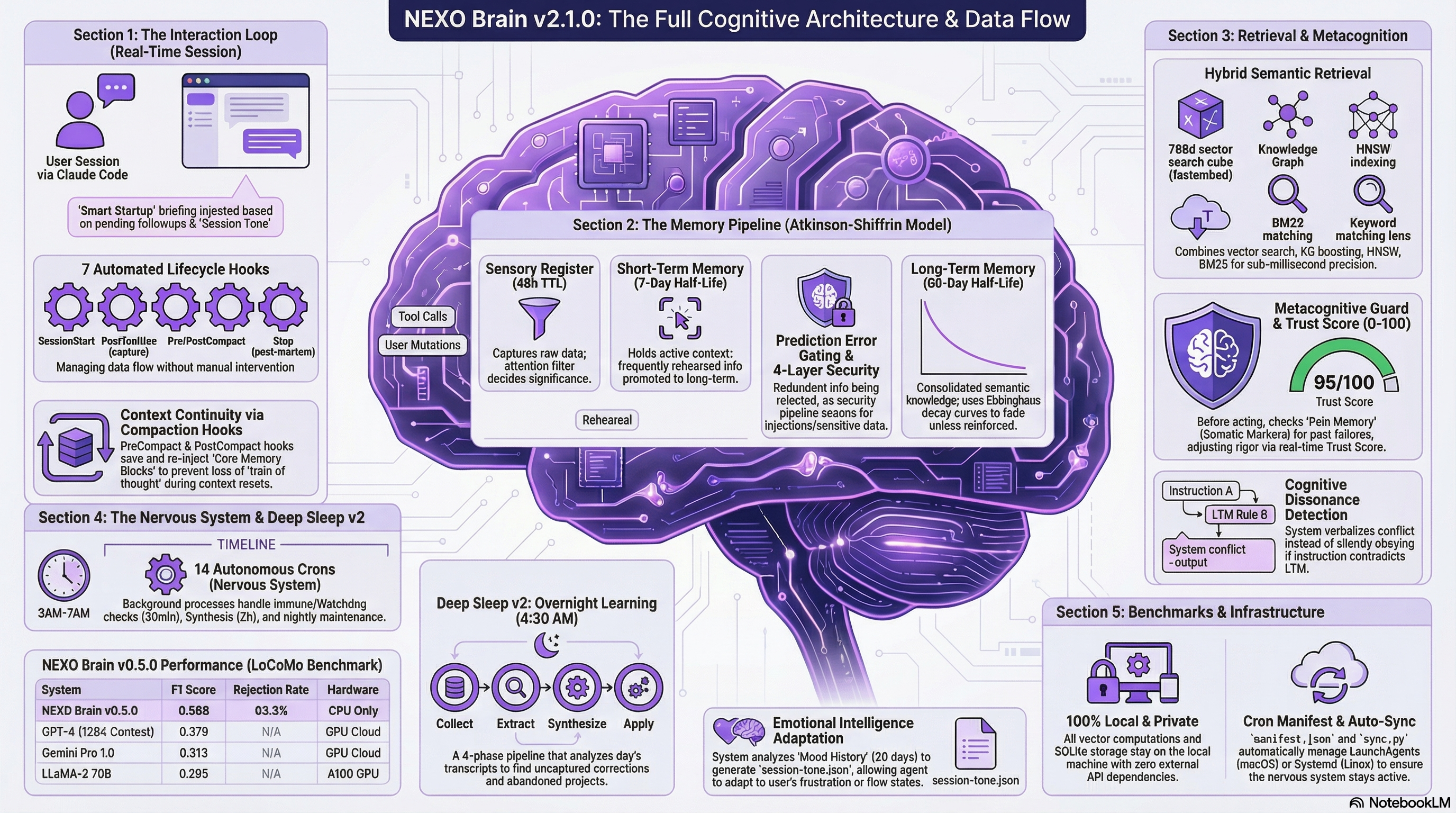
Periodic Deep Sleep Summaries Now Carry Operational Signal
Weekly and monthly summaries used to be useful horizon artifacts, but they still leaned too much toward retrospective narrative. In 2.7.0 they become operational reports.
Each periodic summary now includes:
- protocol compliance for heartbeat,
guard_check, andchange_log - loop output metrics such as engineering followups created from recurring patterns
- project pulse so pressure by project is visible instead of buried
- trend vs previous period so improvement and drift are measured, not guessed
The Dashboard Now Tells the Truth Faster
There is a big difference between having data somewhere and surfacing the right operational story. The dashboard now exposes that periodic signal through three narrative slices:
What Matters NowWhat Is DriftingWhat Is Improving
That means NEXO can now show the most important project pressure, the protocols slipping, and the areas getting healthier without making the operator read raw JSON or infer the story manually.
Runtime Doctor Now Audits the Loop, Not Just the Runtime
Operational trust breaks when a system can describe protocol drift but never block on it. 2.7.0 tightens that gap.
Runtime doctor now reads the latest weekly Deep Sleep protocol summary and turns low compliance into explicit health states. If heartbeat or guard_check behavior drifts, the doctor sees it.
Doctor also now checks release-asset drift: package.json, the top changelog heading, and release-facing integration artifacts must line up.
Release Discipline Is Now in the Repo
There was already a personal release validator outside the public repo. That is useful for one operator, but it is not product truth.
2.7.0 adds a public scripts/verify_release_readiness.py command that checks:
- version / changelog alignment
- release artifact sync
- client parity verification
- website drift
- runtime doctor on local release runs
The tagged publish workflow now runs that validator too, so release discipline is enforced in-repo instead of relying on maintainer memory.
The Pending Codex Fixes Ship Here Too
This release also absorbs the pending unreleased Codex launcher fixes that were sitting after v2.6.21. That means the operational release does not go out while obvious terminal-client fixes remain stranded behind it.
Included here:
- better
nexo chatclient selection - corrected Codex launch mode handling
- tracked last terminal choice
- aligned interactive launcher flags
Why This Matters
A cognitive system should not only remember more. It should also become more honest about its own quality. That means detecting drift, measuring whether fixes are being created, and refusing to publish when the public story no longer matches the code.
That is the role of 2.7.0. It is not the flashiest release. It is the one that makes the recent Deep Sleep work trustworthy enough to build on.
Install or Update
New install:
npx nexo-brainExisting installation:
nexo updateSee the full changelog for the exact release contents, or use the latest release as the new baseline if you want the dashboard, doctor, and overnight loop to agree on the same reality.